
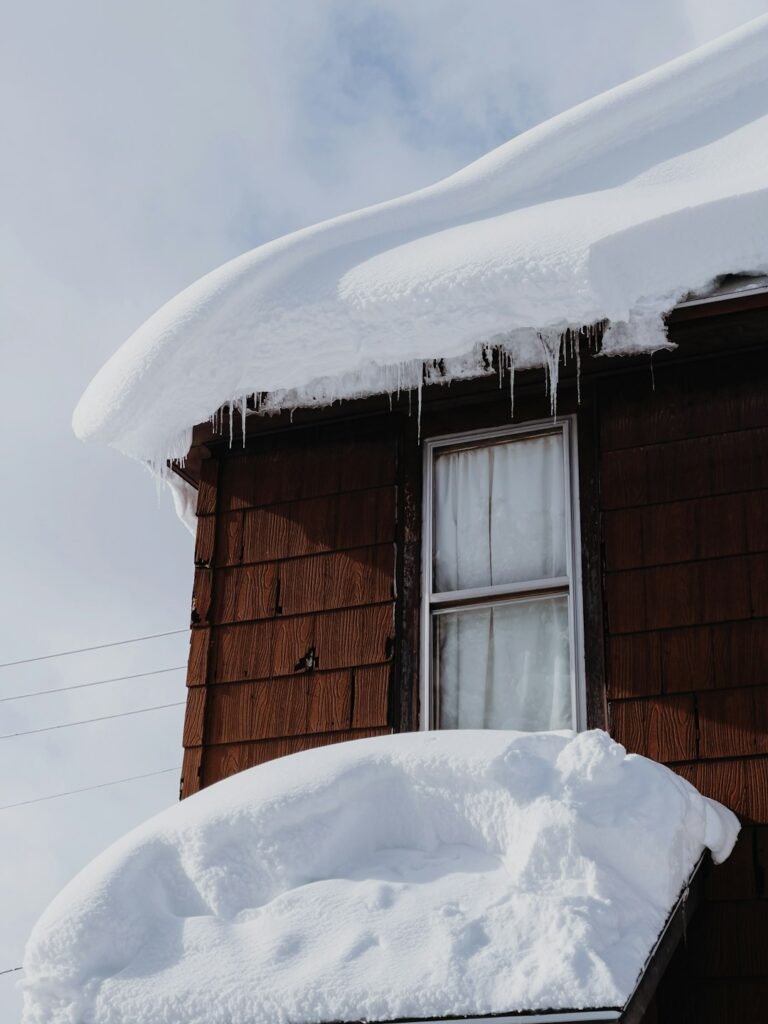
Why local weather matters to a roof
Weather affects a roof gradually and sometimes suddenly. Snow adds weight, rain tests flashing and drainage, wind stresses shingles and metal components, and repeated freezing and thawing can open small paths for water.
In Pulaski, winter conditions deserve particular attention because roofs may face extended periods of snow, ice, cold temperatures, strong winds, and rapid changes between freezing and thawing. A roof that appears sound from the ground can still be affected by moisture beneath shingles, weakened sealants, attic condensation, or movement around flashing.
The roof covering is only one part of the system. The roof deck, underlayment, flashing, ventilation, insulation, gutters, and drainage paths all influence how well a home handles weather.
How snow affects a roof
Snow affects a roof in two main ways: added weight and trapped moisture. A light, dry snowfall may not create a structural concern, but wet snow is much heavier. Several storms close together can create uneven loads, especially where snow drifts against higher roof sections, dormers, valleys, or nearby structures.
Signs that snow or ice may be creating problems include:
- Sagging roof lines
- Interior doors or windows that suddenly become difficult to operate
- Cracking sounds from the attic or ceiling
- New ceiling stains
- Gutter movement or detachment
- Snow sliding unexpectedly from one roof area
Snow should not be removed by walking on a steep or icy roof. Improper shoveling can damage shingles, gutters, flashing, and roof coatings. It can also create a serious fall hazard. If snow loading appears excessive or the structure shows signs of movement, safety should take priority over inspecting the roof personally.
What causes ice dams?
Ice dams form when snow melts on a warmer portion of the roof and refreezes near a colder eave. The ice can block normal drainage, allowing meltwater to collect behind it. That water may move beneath shingles or through gaps around flashing.
Ice dams are often associated with roof temperature differences rather than outdoor temperature alone. Heat escaping from the living space can warm the underside of the roof deck. Poor insulation, air leakage around attic penetrations, blocked soffit vents, and inadequate ventilation can all contribute.
A common misconception is that roof ventilation alone prevents every ice dam. Ventilation can help keep roof temperatures more even, but it does not correct major air leaks or insufficient insulation. The attic floor, ceiling air barrier, insulation, and intake and exhaust ventilation need to work together.
Warning signs include:
- Icicles accompanied by thick ice along the eaves
- Water stains near exterior walls or ceiling edges
- Damp insulation in the attic
- Peeling paint or soft drywall
- Mold-like odors after a thaw
Removing ice with a hammer, axe, or sharp tool can cause more damage than the ice itself. Salt and chemical products may also damage roofing materials, metal components, vegetation, and masonry.
How rain and melting snow find weak points
Most roof leaks do not begin in the middle of an undamaged shingle field. Water more often enters at transitions and penetrations, such as chimneys, plumbing vents, skylights, valleys, sidewalls, and roof edges.
Rain driven by wind can reach areas that remain dry during ordinary weather. Melting snow can be especially persistent because it may remain against flashing or beneath accumulated debris for hours or days.
Gutters and downspouts are part of the roof drainage system. When they are filled with leaves, pine needles, or ice, water can back up against the fascia and roof edge. Overflow can then affect siding, trim, insulation, basements, and foundations.
After heavy rain or a thaw, useful observations include:
- Water marks on ceilings or upper walls
- Damp attic sheathing
- Rust around fasteners or flashing
- Granules collecting in gutters
- Loose or missing sections of roofing
- Water flowing behind gutters rather than through them
A small interior stain does not always show the exact location of the exterior problem. Water can travel along rafters, roof decking, insulation, or framing before becoming visible indoors.
What wind does to roofing materials
Wind can lift shingle edges, loosen flashing, damage ridge caps, and pull at gutters or vent covers. The risk is higher when shingles are already brittle, poorly sealed, aged, or damaged by earlier storms.
Strong gusts do not need to remove an entire roof to cause a leak. A single lifted shingle or displaced flashing section may allow repeated water entry during later rain.
After a windy event, look from the ground for:
- Shingles that appear raised, curled, or missing
- Exposed underlayment or dark roof decking
- Metal flashing that looks bent or displaced
- Debris lodged in valleys
- Branches resting on the roof
- Gutter sections pulling away from the building

Avoid climbing onto the roof immediately after a storm. Wet surfaces, hidden damage, and unstable debris create additional hazards.
How summer heat and sunlight affect a roof
Warm weather can age roofing materials even when no storm damage is visible. Sunlight gradually weakens some shingle surfaces, while repeated heating and cooling cause materials to expand and contract.
Heat-related changes may include curling edges, blistering, cracking, faded surfaces, and loss of protective granules. Dark roof areas may become especially hot, and poor attic ventilation can increase heat buildup below the roof covering.
Summer storms also bring wind-driven rain, falling branches, and rapid temperature changes. A roof that has survived winter may still develop problems during the first heavy rain of the warmer season because damaged flashing or frozen seams become exposed.
Why freeze-thaw cycles are hard on roofs
Freezing and thawing can enlarge small cracks in shingles, flashing, masonry, and sealants. Water enters a narrow opening, freezes, expands, and gradually widens the gap. Repeated cycles can also move roof components slightly as materials expand and contract at different rates.
These cycles are especially challenging around:
- Chimney flashing
- Valley metal
- Roof-to-wall intersections
- Pipe boots
- Skylight frames
- Gutter fasteners
- Older sealant joints
A roof may not leak during the coldest part of winter or during a single rainstorm. Leakage may appear only during a specific combination of thawing snow, wind, and refreezing temperatures.
What homeowners can check safely
Routine observation from the ground and from accessible indoor areas can reveal problems early. Seasonal checks are useful after major snowfalls, high winds, heavy rain, and the first substantial thaw.
A practical inspection routine includes:
- Looking for missing, lifted, or curled roofing materials from ground level
- Checking attic spaces for damp insulation, frost, stains, or musty odors
- Clearing leaves and debris from accessible gutters
- Confirming that downspouts discharge water away from the foundation
- Watching for new ceiling stains after storms
- Trimming branches that can scrape or fall onto the roof
- Keeping attic insulation and ventilation pathways from being blocked
Roof access becomes hazardous during snow, ice, rain, high winds, and extreme heat. Structural sagging, active leaks near electrical fixtures, or suspected storm damage may require prompt attention because delaying action can allow a small problem to spread.
Weather cannot be controlled, but its effects can be reduced through sound drainage, proper attic conditions, intact flashing, secure roof materials, and timely observation. In a climate with snowy winters and frequent freeze-thaw changes, understanding how those forces interact is one of the most useful parts of maintaining a home.
